
 Merken
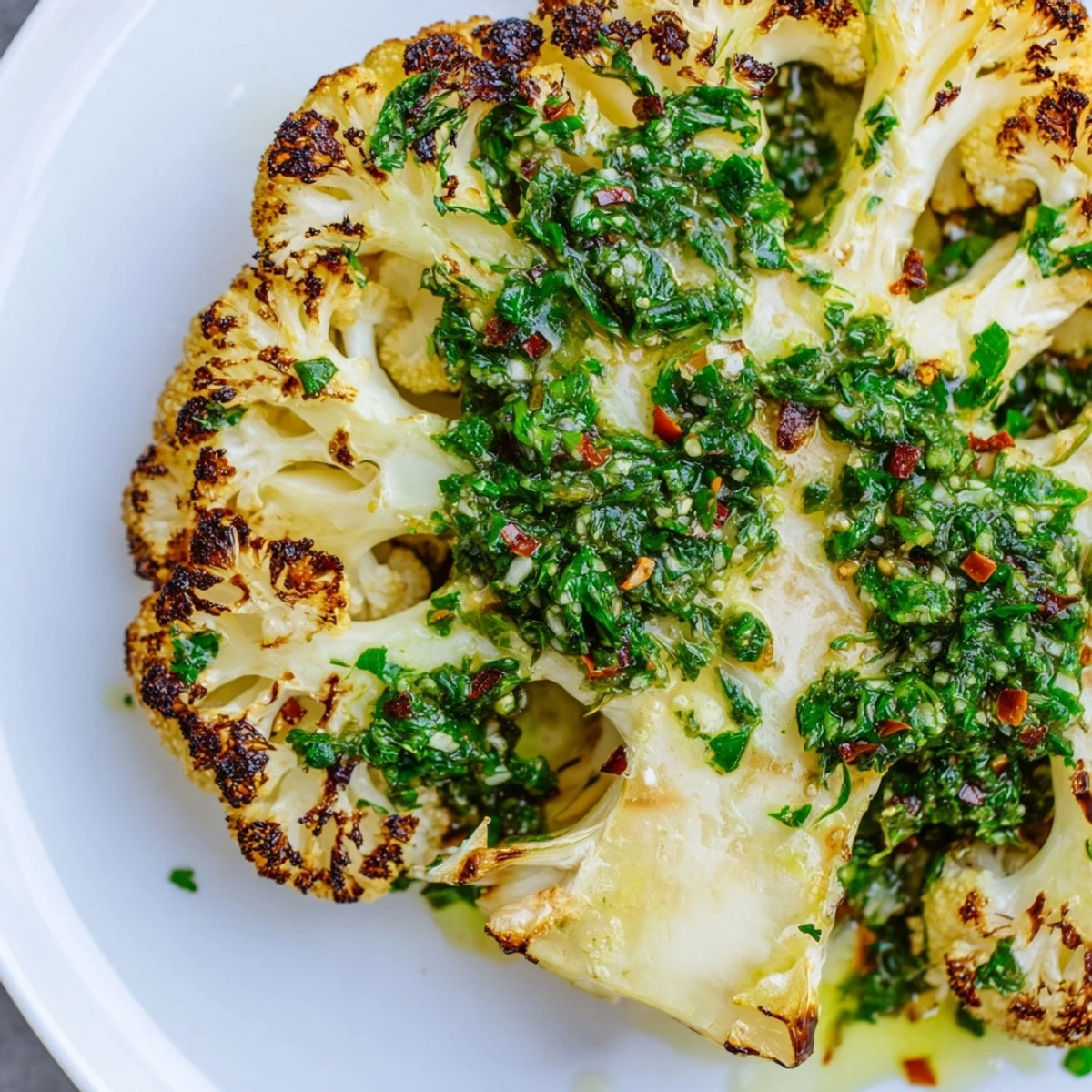
 Dicke Blumenkohlsteaks werden im Ofen goldbraun und zart geröstet. Gewürzt mit Olivenöl, Meersalz und Paprika entfalten sie ein intensives Aroma. Darauf sorgt eine frische Chimichurri-Sauce aus Petersilie, Koriander, Knoblauch, Rotweinessig und fein abgestimmten Gewürzen für frische Kräuternoten und eine leichte Schärfe. Dieses Gericht bietet eine ausgewogene Mischung aus herzhaften und kräuterfrischen Aromen, ideal als Hauptgericht oder Beilage, die sich einfach zubereiten lässt und vegan sowie glutenfrei ist.
The first time I roasted cauliflower steaks, I wasn't trying to reinvent anything—I was actually just tired of the usual vegetable sides. My roommate had brought back a bottle of chimichurri from an Argentine restaurant, and I remember standing in the kitchen thinking, what if I treated cauliflower like a proper piece of protein? When those thick slices came out of the oven with their golden-brown edges, caramelized and tender, something clicked. A drizzle of that vibrant, herby sauce made it feel like an actual main course, not a compromise.
I made this for a dinner where everyone had different dietary restrictions, and I was honestly nervous. But watching my friend—who usually jokes about missing meat—take a second helping and say the cauliflower was better than the main dish someone else had brought? That's when I knew this recipe had staying power. It's become my go-to when I want to cook something generous and foolproof.
Ingredients
- Cauliflower Heads (2 large): Choose heads that are dense and heavy for their size; this ensures your steaks will be meaty and substantial rather than crumbly.
- Olive Oil (2 tbsp for roasting, 1/2 cup for chimichurri): Use a good-quality extra-virgin for the sauce where you can taste it, and a regular olive oil for roasting since high heat can make fancy oil taste bitter.
- Sea Salt and Black Pepper: Fresh-cracked pepper makes all the difference here; pre-ground loses its brightness.
- Smoked Paprika (1/2 tsp, optional): This adds a whisper of depth that makes people ask what your secret ingredient is.
- Fresh Parsley (1 cup finely chopped): The backbone of chimichurri; don't skip it or use dried, the freshness is what makes this sauce sing.
- Fresh Cilantro (1/4 cup finely chopped): If cilantro makes your mouth taste like soap, swap it for more parsley without guilt.
- Red Wine Vinegar (3 tbsp): This brings the brightness; it's what stops the sauce from tasting flat and heavy.
- Garlic (3 cloves minced): Mince it fine so it distributes evenly rather than leaving harsh chunks.
- Red Pepper Flakes (1/2 tsp): Start here and taste as you go; this is your heat control.
Instructions
- Heat your oven and prepare:
- Get your oven to 425°F and line a baking sheet with parchment paper. This temperature is hot enough to caramelize the cauliflower's edges while keeping the inside tender.
- Slice the cauliflower steaks:
- Cut away the leaves and trim the stem, keeping the core intact so your steaks hold together. Slice each head into 3/4-inch thick planks; you'll get about 2–3 steaks per head depending on size, and those smaller florets? Save them for roasting separately or tossing into a grain bowl.
- Season and brush:
- Arrange steaks on your sheet, brush both sides with olive oil, then scatter salt, pepper, and smoked paprika over them. Don't be shy with the oil; this is what gives you those crispy, caramelized edges.
- Roast until golden:
- Pop them in for 20 minutes, then carefully flip each steak and roast for another 10 minutes. You want them golden-brown on both sides and fork-tender in the middle; if your oven runs cool, give them a few extra minutes.
- Make the chimichurri:
- While everything roasts, combine your chopped parsley and cilantro with red wine vinegar, minced garlic, red pepper flakes, salt, and pepper in a bowl. Pour in the olive oil and stir it all together; let it sit for a minute so the flavors start marrying.
- Bring it together:
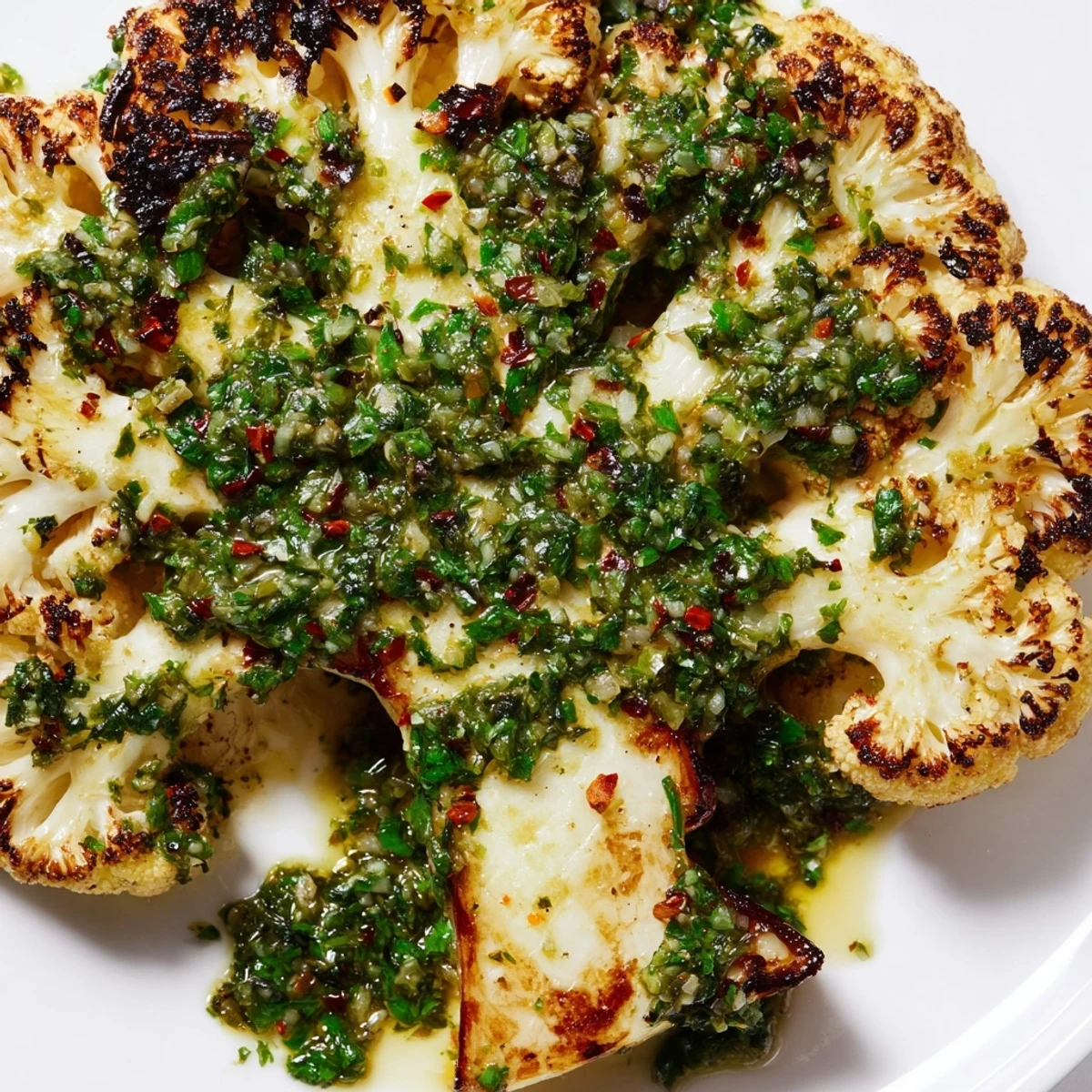
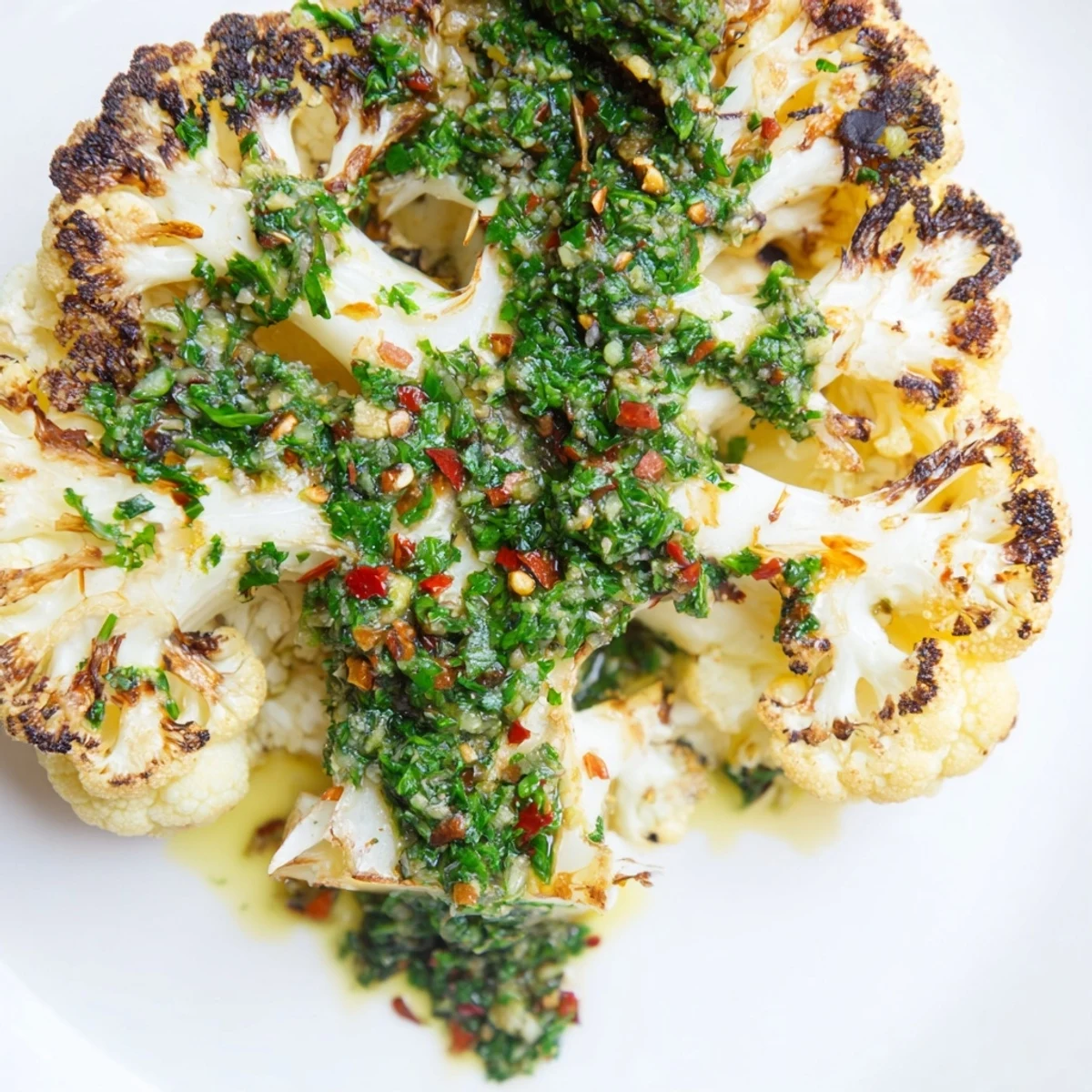
- Arrange those golden cauliflower steaks on a platter and spoon the chimichurri generously over the top. Serve it warm right from the oven or at room temperature; both are beautiful.
 Merken
 There was this moment at a potluck where someone asked for my recipe while still chewing, and I realized this isn't just a side dish anymore—it's something people actually crave. The combination of that roasted, nutty cauliflower with the fresh, punchy chimichurri just works.
Why This Technique Works
Roasting cauliflower in thick slices instead of florets changes everything. The flat surfaces get direct contact with the hot pan, creating that golden crust through the Maillard reaction—the same magic that makes a seared steak delicious. Inside, the heat gentles the vegetable into something creamy and sweet. It's the difference between steamed cauliflower and something you'd actually plan a meal around.
Making Chimichurri Your Own
Chimichurri is less a rigid formula and more a template you can dance around. The parsley is non-negotiable—it's the soul of the sauce—but the rest? I've played with it a hundred ways. Sometimes I add a touch of lemon juice for brightness, other times a splash of sherry vinegar if that's what I have. My neighbor swears by adding a pinch of oregano, and honestly, she's not wrong.
Serving and Pairing Ideas
Serve these steaks warm straight from the oven, or let them cool to room temperature—the chimichurri actually gets better as it sits and the flavors deepen. Pair them with something light and fresh like quinoa, fluffy rice, or grilled summer vegetables. If you're doing wine, a crisp Sauvignon Blanc or a chilled, light red cuts through beautifully.
- A squeeze of fresh lemon juice over everything just before eating adds a final brightness that ties it all together.
- Leftover chimichurri is gold—spoon it over roasted vegetables, grains, or even spread it on a sandwich the next day.
- Make extra chimichurri and keep it in a jar in the fridge; it keeps for about a week and makes any plain cooked vegetable or grain feel special.
 Merken
 This is the kind of dish that reminds you that vegetable cooking doesn't have to be about what's missing—it's about what you're actually making. Once you master this technique, you'll find yourself reaching for it again and again.
Häufige Fragen zum Rezept
- → Wie schneidet man Blumenkohlsteaks richtig zu?
-
Den Blumenkohl so in etwa 2 cm dicke Scheiben schneiden, dass der Strunk nicht zerfällt und die Steaks während des Röstens stabil bleiben.
- → Wie wird die Chimichurri-Sauce am besten zubereitet?
-
Alle frischen Kräuter und Gewürze in eine Schüssel geben, dann langsam das Olivenöl unterrühren, bis eine möglichst glatte Sauce entsteht.
- → Kann man die Blumenkohlsteaks vorher marinieren?
-
Ja, das Bestreichen mit Olivenöl und Gewürzen vor dem Rösten sorgt für intensiveren Geschmack und bessere Bräunung.
- → Mit welchen Beilagen passt das Gericht gut zusammen?
-
Quinoa, Reis oder gegrilltes Gemüse ergänzen die Blumenkohlsteaks hervorragend und schaffen eine vollwertige Mahlzeit.
- → Wie lange dauert das Rösten der Blumenkohlsteaks?
-
Insgesamt etwa 30 Minuten bei 220 °C, dabei die Steaks nach 20 Minuten wenden, um ein gleichmäßiges Garen zu gewährleisten.